How A Poetic Doodle Begins
Weaving is a relatively new hobby for me. Māori weaving, that is.
It's a niche hobby in many parts of the world. In Aotearoa New Zealand, however, Māori weaving is well known and practised by tens of thousands of people.
I've taken it up later in life and now that I have, I wish I started learning it sooner - before arthritis sets in and I can't weave as much as I'd like to.
As a hobby writer and observer of people, I've discovered that Māori weaving is also a rich source of what I call 'Poetic Doodles'.
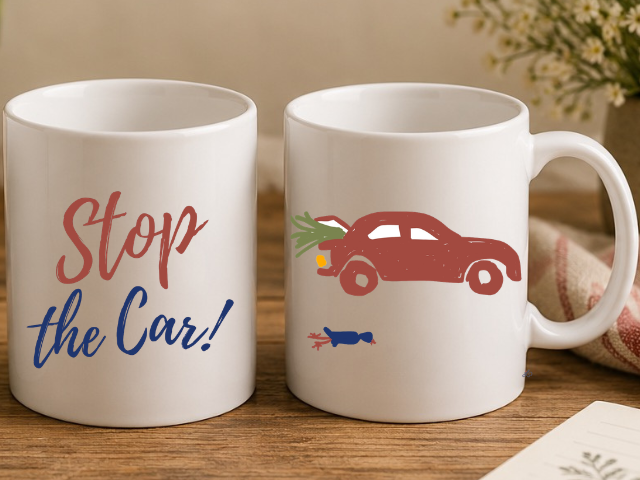
Take, for example, the mug called Stop The Car! from the Māori Weaving collection.
If you look closely at the doodle on the back, you'll see a car with harakeke sticking out of the boot and what appears to be a rather unfortunate squashed bird on the road.
To most people, it probably makes very little sense.
To a weaver, however, it makes perfect sense.
Because many Māori weavers have experienced the same moment.
Driving along.
Spotting a dead Pūkeko on the roadside.
Slamming on the brakes.
And thinking:
"Stop the car!"
Not because they enjoy collecting dead birds.
Quite the opposite.
A weaver sees feathers.
And a future Kahu huruhuru.
A chance to honour the bird by giving those feathers a second life in the form of a feathered cloak.
The first time I heard weavers talking about roadside birds, I chuckled.
Not because the situation was funny.
Because the reaction was so instantly recognisable.
The more experienced weavers nodded knowingly.
Everyone understood.
Everyone had a story.
And that moment is where this doodle comes from.
Not from drawing.
From noticing.
A Poetic Doodle is rarely about the object itself.
It's about a moment of recognition.
That feeling of:
"I know exactly what you mean."
"I've done that too."
"That's us."
The doodle simply gives the observation somewhere to live.
And sometimes, if I'm lucky, it ends up on a mug.